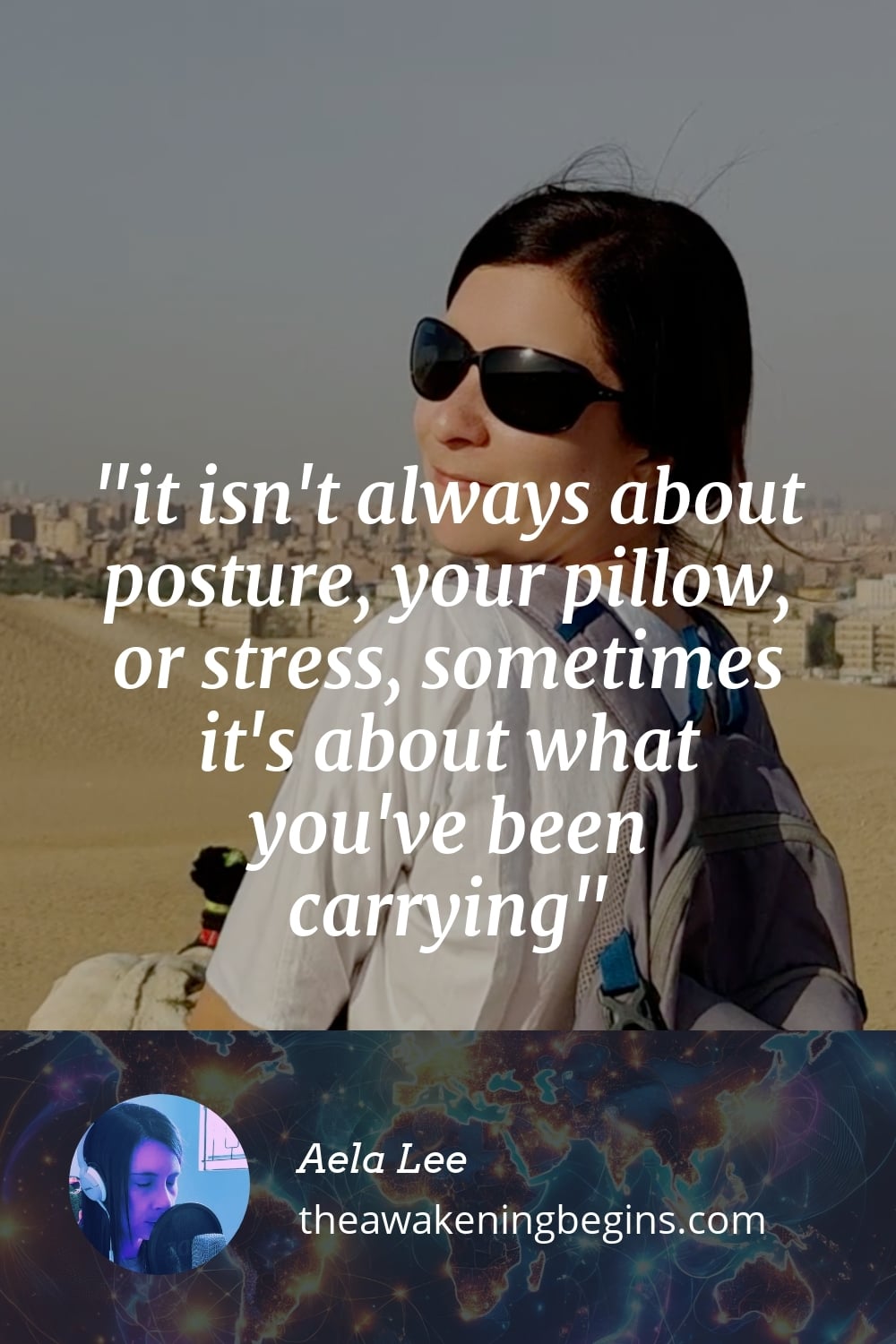

Have you ever realized that your chronic shoulder tension isn’t just about posture? I’ve discovered that for many, it’s the nervous system internalizing the belief that ‘vigilance equals safety’. If you’ve tried everything to relieve neck and shoulder pain without success, it might be time to understand what your tight shoulders are really telling you about what you’ve been carrying emotionally and mentally.
Prefer to watch? I’ve put my video below or if you prefer to read simply scroll below.
Beyond Posture, Pillows, and Stress
Chronic shoulder and neck tension is not always caused by physical factors. While many people immediately focus on external solutions, the root cause is often deeper. This tension can be a physical manifestation of the emotional and mental burdens you have been carrying, rather than a simple issue with posture or daily stress.
Most people experiencing this discomfort immediately try to eliminate it through stretching, massage, or other physical therapies. However, few people pause to consider what their body might be trying to communicate. We often blame common culprits for our pain, such as:
- Poor posture from sitting at a desk
- Sleeping with the wrong pillow
- General life stress
But what if the answer isn’t about fixing something external? What if it’s about understanding an internal message?
Carrying Burdens That Were Never Yours
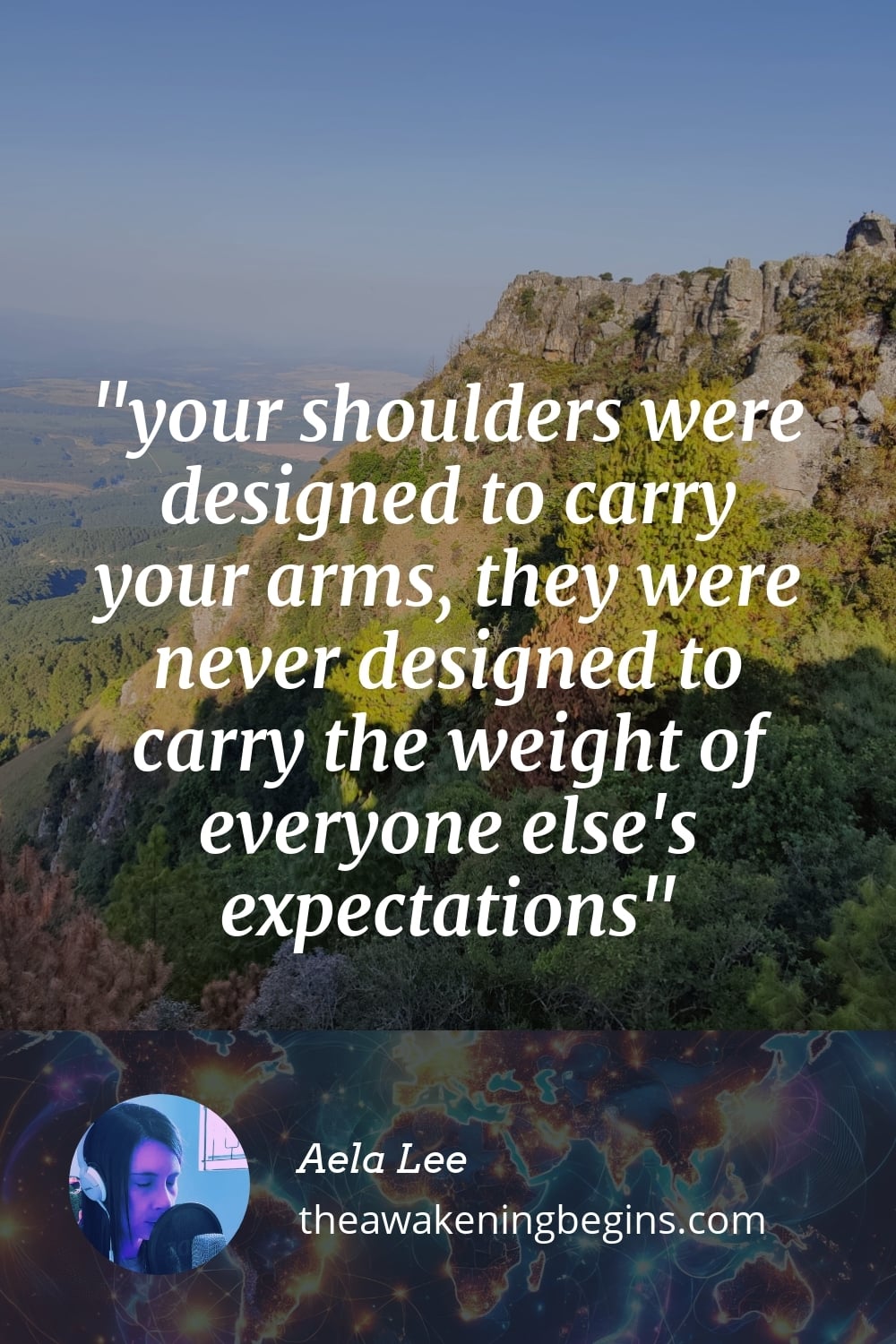
Your shoulders are designed to carry your arms, not the immense weight of external pressures and responsibilities. Many people unconsciously take on the burdens of others, including their expectations, problems, and potential future outcomes. This chronic state of “carrying” teaches the body to remain in a constant state of defense and preparedness.
So many of us spend our lives trying to hold everything together, attempting to stay ahead and prevent anything from going wrong. We carry responsibilities that were never meant for us to handle alone. Over time, the body adapts to this perceived threat. The neck becomes vigilant, the shoulders brace for impact, and the muscles stay activated even when the original source of stress is gone.
Your shoulders were designed to carry your arms. They were never designed to carry the weight of everyone else’s expectations. They were never designed to carry everyone else’s responsibilities or outcomes or problems or future possibilities.
What Your Tight Shoulders Are Really Telling You
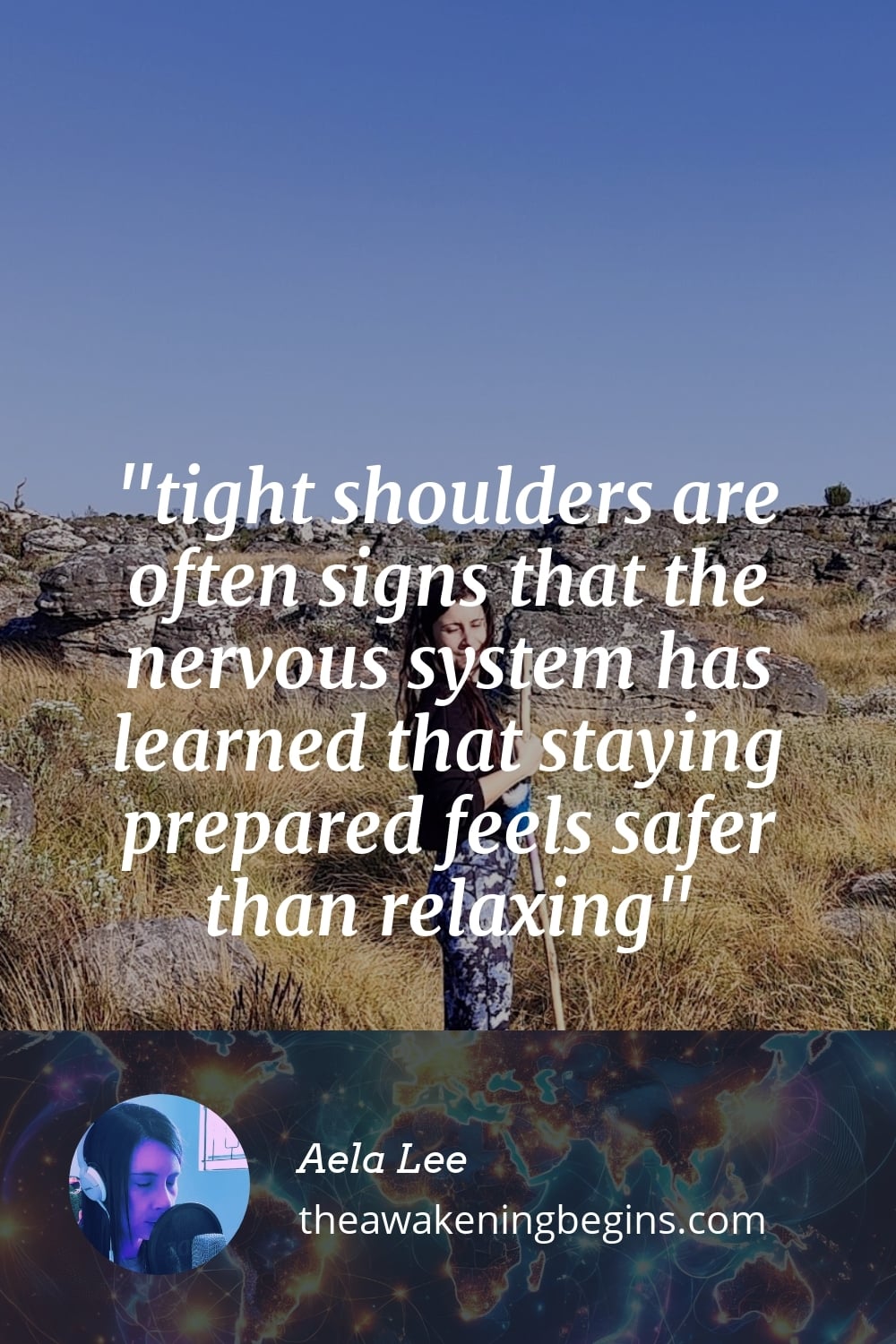
Persistent tension is often a sign that your nervous system has learned a specific survival strategy where vigilance equals protection. The body, in its intelligence, keeps muscles tensed because it believes that staying prepared and braced is safer than relaxing. The tension is not a flaw but a learned adaptive response that once served a purpose.
For some, the act of letting go does not feel safe. Relaxing can feel vulnerable because the body’s default programming equates a lack of tension with a lack of protection. This is why attempting to force the tension away through aggressive stretching or massage rarely leads to lasting change. When you fight the tension, you are fighting against a strategy your own body created to keep you safe.
For some people, relaxing doesn’t feel safe. Letting go doesn’t feel safe. Not carrying everything doesn’t feel safe because the body has learned that vigilance equals protection. So the tension remains as a strategy.
How to Start Listening to Your Body
True, lasting change begins when the body no longer feels the need to carry everything. This happens when the nervous system discovers that safety can exist without constant vigilance and when responsibility becomes balanced instead of overwhelming. Instead of asking how to get rid of the tension, a more powerful question emerges.
Start by asking, “What have I been carrying that my body is asking me to notice?” This shift in perspective allows your awareness to be present with the sensation, not as an enemy, but as a messenger. As your awareness responds to new signals of safety, the body can begin to let go of its protective patterns. If you want to better understand the language of your body, you can explore the resources and events we have available in our Etayowa Community.
Frequently Asked Questions
Why are my shoulders always tight if it’s not my posture?
Your tight shoulders may be a physical response to carrying emotional and mental burdens. Over time, the body adapts by keeping muscles tensed as a protective strategy, believing that constant vigilance is safer than relaxation. This pattern persists even when the stressful situation has passed.
What does it mean if relaxing doesn’t feel safe?
If relaxing feels unsafe, it indicates your nervous system has learned that being on guard provides protection. This is an adaptive response where tension is a strategy to stay prepared for perceived threats. Your body is intelligently holding onto this pattern because it once made sense for survival.
How can I start to release this kind of shoulder tension?
Begin by shifting your focus from trying to force the tension away to understanding its message. Ask yourself what burdens you have been carrying that are not yours. Real change occurs when your nervous system learns that safety can exist without constant vigilance.